
 by
by By Cory Thorson, M.S., AMFT
Have you ever asked yourself:
What is a boundary?
Why should I set a boundary?
How do I set a healthy boundary?
Navigating the world of relationships—whether with a partner, family member, friend, or coworker—can be both rewarding and challenging. One of the most powerful tools for creating healthy, balanced connections is the ability to set and maintain boundaries. Yet, many people struggle with this concept, feeling unsure about how to assert their needs without guilt or fear of conflict.
As a Marriage and Family Therapist, I can see how unclear or absent boundaries can lead to stress, resentment, or even the breakdown of relationships. In this post, I’ll guide you through understanding what boundaries are, why they matter, and how to set them in a way that fosters respect for yourself and others. Setting boundaries is not about building walls—it’s about creating space for healthier, more fulfilling connections.

What is a boundary?
A boundary is a strategy clear guideline, rule, or limit that you set for yourself to protect your emotional, physical, and mental well-being. Boundaries define what is acceptable and unacceptable behavior from others and help establish how you want to be treated in relationships.
They Protect Your Well-Being: Boundaries ensure your needs are met and prevent others from overstepping into areas that make you uncomfortable.
They Are Personal: Boundaries are unique to each individual and shaped by personal values, experiences, and comfort levels.
They Foster Healthy Relationships: Boundaries create mutual respect by setting expectations for how you want to be treated while respecting the needs of others.
They Are Communicated and Enforced: A boundary needs to be clearly expressed and reinforced consistently for it to be effective.
They Are Not About Control: Boundaries are about defining your limits—not about controlling others. They focus on what you will or won’t do in response to certain behaviors.
| Boundary Types | |
| Time | Protect how you use your time. Setting time boundaries can help you prioritize and avoid overcommitting. |
| Emotional | Protect your emotional well-being and help you show empathy without absorbing other people’s feelings. |
| Sexual | Protect your right to consent and define what kind of sexual intimacy you want. |
| Material | Protect your personal belongings, such as money, clothes, vehicles, and homes. |
| Spiritual | Protect your right to practice your spiritual or religious beliefs. |
| Intellectual | Protect your thoughts, beliefs, and ideas. For example, you might set boundaries about what you’re comfortable discussing with others. |
| Financial | Protect your financial health and well-being. For example, you might set a budget. |

| Boundary Styles | |
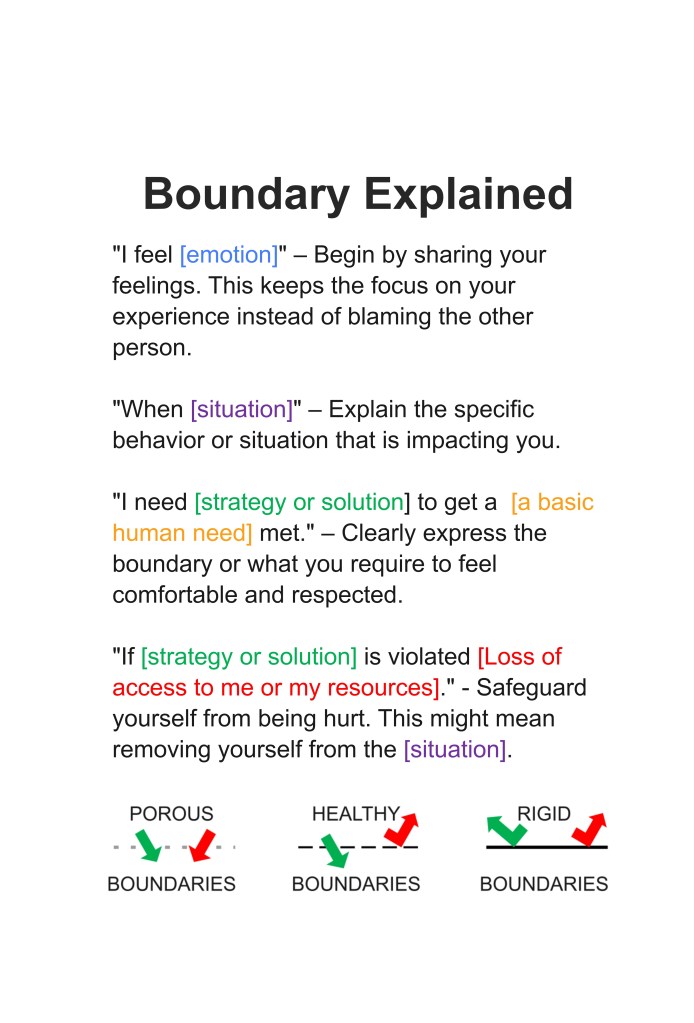
| Rigid Boundaries are overly strict, inflexible, and can create emotional distance. Individuals with rigid boundaries may have difficulty expressing their needs or feelings and often avoid emotional intimacy. They may push others away or have a “walls up” approach to protect themselves.Impact: This type of boundary can lead to isolation, misunderstanding, and difficulty forming close relationships. It may protect against emotional hurt but at the cost of emotional connection. | |
| Porous Boundaries are weak or unclear, often leading to over-attachment or enmeshment. People with porous boundaries may have difficulty saying “no” and usually sacrifice their own needs to meet the needs of others. They may have trouble distinguishing between their feelings and the feelings of others.Impact: This can lead to burnout, resentment, and a loss of identity. While it may feel like a way to be close to others, porous boundaries can cause emotional harm due to a lack of self-care and over-dependence on others. | |
| Healthy Boundaries are balanced, flexible, and transparent. They allow individuals to maintain their sense of self while being open to others. People with healthy boundaries can communicate their needs, express their feelings, and assert their limits while respecting others’ needs and feelings.Impact: This type of boundary fosters mutual respect, emotional intimacy, and well-being in relationships. It allows for connection without compromising one’s own identity or needs. | |

Why should I set a boundary?
Maintaining Individuality: Boundaries protect your sense of self within the relationship, ensuring you don’t lose your identity. They allow you to maintain autonomy while being connected. Recognizing and expressing your needs helps ensure that your unique preferences and desires are acknowledged.
Preventing Resentment: When boundaries are unclear, one person may feel overburdened or taken advantage of, leading to resentment. Unmet needs, especially when unspoken, can build frustration and hurt feelings. Openly sharing your needs helps prevent misunderstandings and unmet expectations.
Fostering Respect: Respecting each other’s boundaries demonstrates care and value for one another’s comfort and limits. Acknowledging and striving to meet each other’s needs shows commitment to the relationship and builds trust.
Promoting Healthy Communication: Boundaries encourage open dialogue about what is acceptable and what isn’t, reducing the chances of conflict. Expressing needs encourages honest conversations that deepen emotional intimacy and understanding.
Ensuring Emotional Safety: Clear boundaries create a safe space where both partners feel secure to be themselves without fear of judgment or violation. Voicing needs openly helps each partner feel seen and valued, contributing to emotional well-being.
Supporting Growth: Boundaries allow space for personal growth by balancing togetherness with independence.Meeting each other’s needs fosters mutual support for achieving personal and shared goals.
Building Trust: Setting and respecting boundaries shows reliability and trustworthiness. Meeting each other’s needs strengthens the bond by reinforcing the idea that both partners care for and prioritize each other.
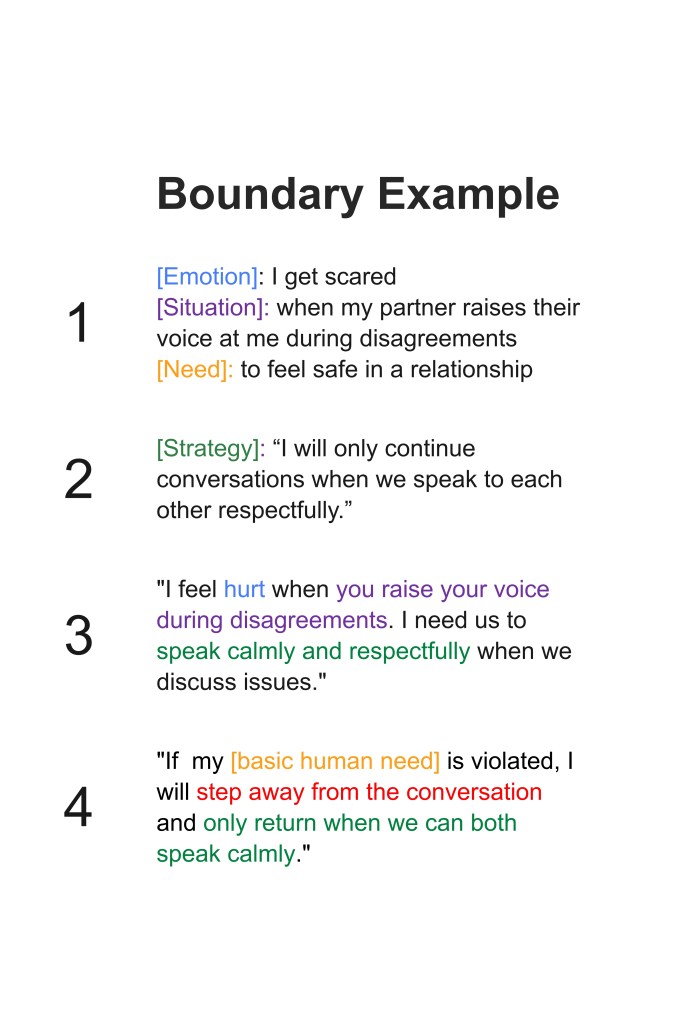
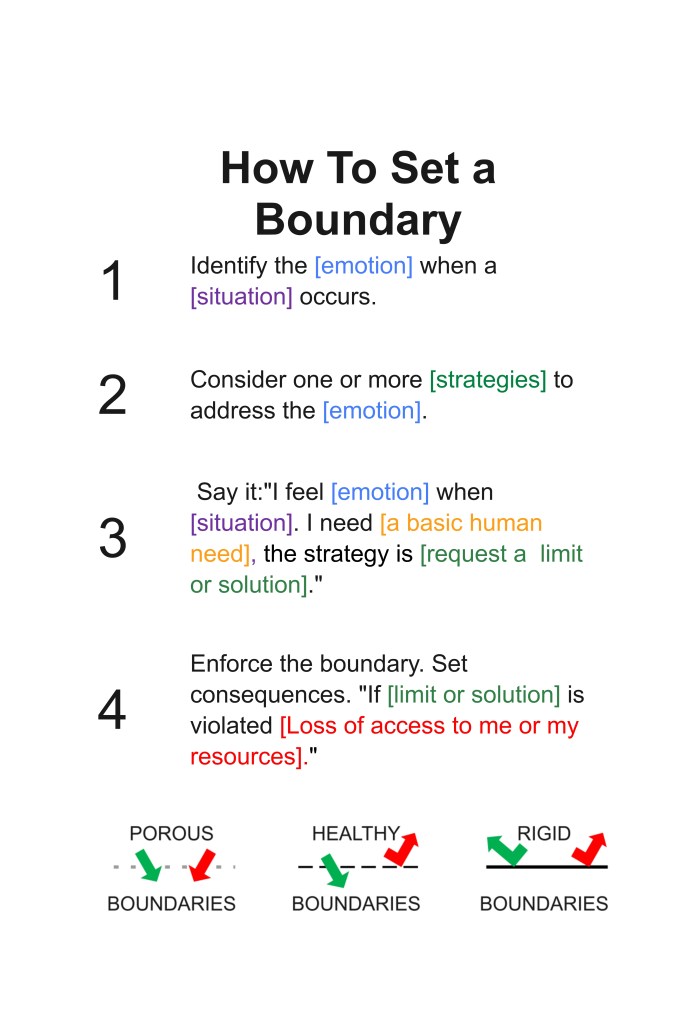
How do I set a healthy boundary?

Conclusion
Setting and maintaining boundaries is one of the most empowering steps you can take for your emotional, physical, and relational well-being. Boundaries are not about shutting people out—they’re about fostering respect, trust, and healthy communication in your relationships. By identifying your needs, communicating them clearly, and enforcing your boundaries consistently, you create space for deeper connection and mutual respect.
Remember, you are the guardian of your well-being. You don’t need permission or approval to honor your boundaries. Whether it’s protecting your time, emotions, or personal space, boundaries are tools that help you show up as your authentic self while maintaining healthy and fulfilling relationships.
Take the first step today: identify an area in your life where you feel overwhelmed, undervalued, or drained. Set a boundary, and watch how it transforms not only your relationships but also your relationship with yourself.
What’s one boundary you’re ready to set today?
 Hope Therapy